 United Kingdom, GBP
 United States, USD
 Canada, CAD
 Australia, AUD
 New Zealand, NZD
 European Union, EUR
 France, EUR
 Switzerland, CHF
 Germany, EUR

Rumour has it that good sex could be an act of self-care. Lovehoney surveyed over 2,000 people in the UK to find out if we have sex for reasons that aren't just related to pleasure. The results point to a shift towards self-care, particularly amongst Gen Z:
- Almost 1 in 5 respondents (18%) have had sex to relieve period pain (rising to 43% among Gen Z)
- 65% of people have had sex to relieve stress
- 60% of people have had sex to help us drift off to sleep
- 39% of respondents answered they’ve had sex instead of exercising for the health benefits*
“Sex can do more than feel amazing,” explains Annabelle Knight, our sex and relationship expert. “It can flood the body with feel-good hormones like dopamine, endorphins, serotonin, and oxytocin. This can have all sorts of positive impacts, including boosting our self-esteem, reducing anxiety, improving fitness levels, and even strengthening an emotional connection with our partner(s).”
Before we get into all the glorious benefits of great sex, it’s important to note that sexual activity only complements, never replaces medical treatment. Always consult a healthcare professional with pain complaints, chronic pain, and medical concerns.
Now that's out of the way, let's dig into the data and explore all the ways sex can be part of your wellness routine.

The science behind sex
“While never a replacement for pain killers, medical advice or treatment, sex may have some surprising health benefits, including strengthening your pelvic floor and aiding menstrual cramps when done mindfully. Regular sex may even reduce the risk of prostate cancer,” says Annabelle.
So, what's happening to our bodies when we have sex?
Cardiovascular benefits
During sexual activity, your heart rate rises much like it does during exercise, helping boost circulation and support cardiovascular health. Think of it as a light workout, like a fast vinyasa flow class or a brisk walk... only with more pleasure.
Hormones released during sex
That feel-good glow you get after great sex? It comes from a rush of hormones released during arousal and intimacy, helping explain why sex feels so deliciously good.
- Endorphins: The body’s natural pain relievers, endorphins, are released during orgasm. These euphoric hormones can help ease discomfort, reduce stress, and boost your mood.
- Dopamine: Known as the “feel-good” hormone, dopamine drives desire. As part of the brain’s reward system, it makes getting what you want even more satisfying.
- Oxytocin: Known as the “bonding hormone” or “cuddle chemical”, oxytocin is released during physical touch and orgasm. It's linked to arousal, trust and emotional bonding, helping us feel closer and more connected.

1. Sex for sleep
Ever felt like you can't keep your eyes open after sex? The rush of hormones can make you feel more emotionally connected to your partner, creating feelings of emotional warmth, trust, and relaxation, which can make it easier to unwind and sleep well.
Plus, you've just had a light workout, so your body might feel ready to rest. However, Those with higher levels of vasopressin, a hormone related to sexual motivation, may experience sex for sleep differently. Vasopressin has been linked to increased vigilance and wakefulness, which may explain why some people don’t conk out straight after sex.
Have you ever had sex to fall alseep or sleep better?
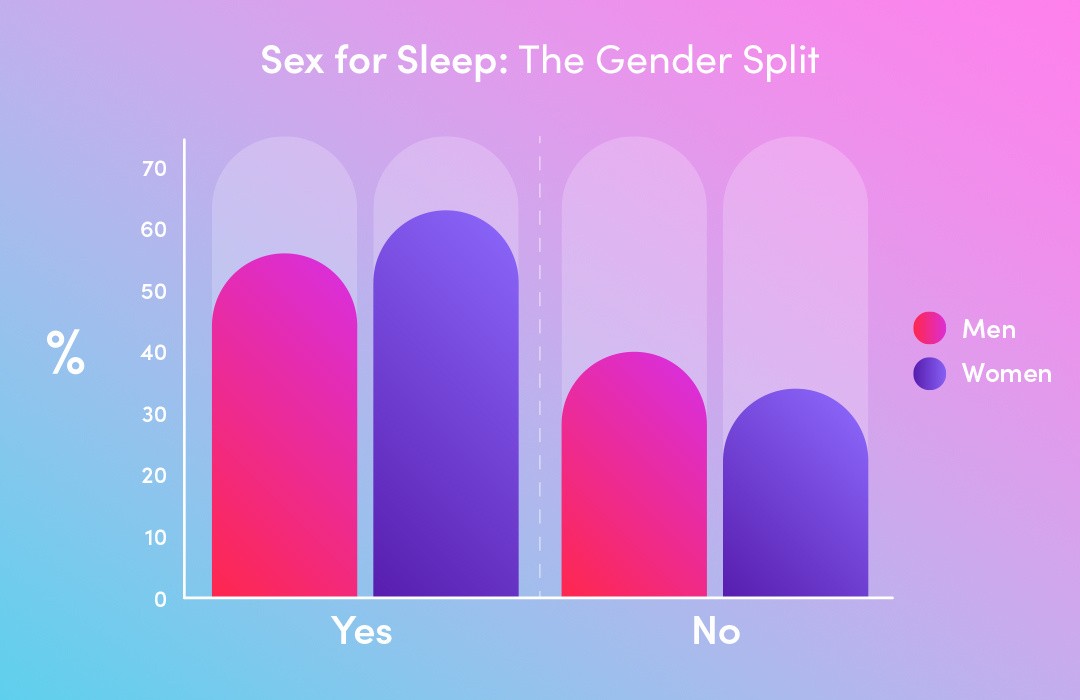
Women appear more on board with having sex to improve their sleep, with 63% answering ‘Yes’ and just over a third (34%) of respondents answering ‘No’. Men appear to be not so convinced, with only 56% answering ‘Yes’ and 40% ‘No’.
Which generation has sex for sleep?
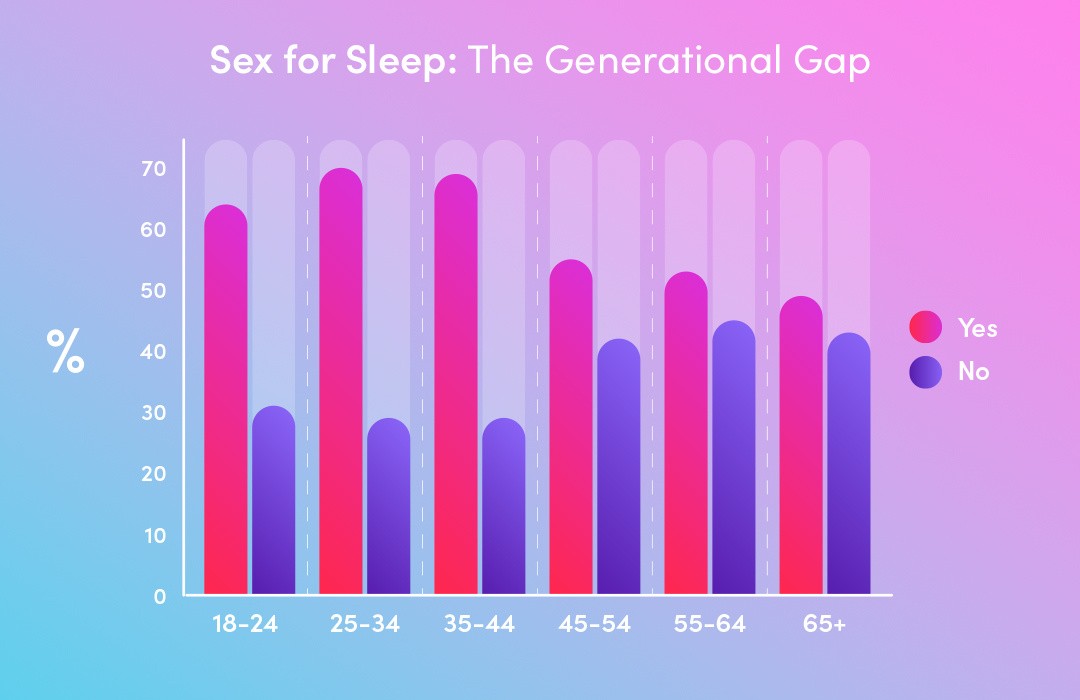
Millennials are paving the way here, as 70% of 25-34 year olds said they’ve had sex to fall asleep and sleep better. This was closely followed by 69% (cheeky) of Millennials/Gen X cusp (35-44), compared with only 49% of the Silent Generation (65+).
Gen Z are 6% less likely than millennials to turn to sex for better sleep. One possible reason? Living at home or in shared spaces can make finding private moments a bit tricky.
Meanwhile, people aged 25-44 are at an interesting stage of life: juggling careers, relationships, and wellness routines. Are millennials more stressed, more open to sex and self-care, or just more likely to be settled in long-term relationships? It could be a combination of all of the above.
With older generations, the number of people using sex to help sleep slowly declines. Maybe libido changes with age, health issues creep in, or they’ve found other ways to unwind that don’t involve the bedroom.
Top 3 sleep-enhancing sex positions
For sex that helps you unwind and drift off, choose positions that are easy on the body, encourage close, calming contact, and keep the pace slow and sensual. Here are Annabelle’s top three easy-to-replicate recommendations…
Spooning

Missionary with a pillow
It’s a classic for a reason. Missionary is easy to adapt for comfort rather than intensity. It allows for gentle movement, closeness, and intimate eye contact, helping you relax and wind down before bed.
Popping a pillow under the receiver’s lower back or hips can enhance comfort by easing strain on the back while gently opening the body up for penetration. You might be surprised by how much a new angle (and plenty of lube) improves the feeling of Missionary sex.
Masturbation
Sleep-enhancing sex doesn’t necessarily require a partner, or penetration. Masturbation, whether partnered or solo, can be a great way for you to fully control the pace and pressure. Start slow, stay mindful and set your own rhythm - gently building sensations to turn this into a deeply relaxing part of your wind-down routine.

2. Sex for headache relief
Headaches can be a total mood killer, and the majority of respondents wouldn't have sex to relieve one. For most people, the best treatment is hydration, quiet, and rest. But for nearly a quarter of us (23%), it's sex!
When we break things down by region, Yorkshire folk are the least on board with having sex for headache relief, with only 15% answering yes, compared with Northern Ireland, where the figures more than double to 33%.
Meanwhile, bisexual people are twice as likely as straight people to try sex for headache relief (40% of bisexuals, compared to 22% of heterosexuals).
Millennials are also more likely than Gen Z to try this tactic, with over a third (37%) of millennials saying they have sex to relieve a headache, compared to only 30% of Gen Z. Nevertheless, Gen Z tend to lead the way when it comes to sex for wellness, as you'll see later on.
3. Sex for period pain relief
Does sex help with period pain? Yes, for some people!
In addition to feel-good hormones, orgasm can increase blood flow to the pelvic floor while causing the uterus to contract and then relax, which can temporarily reduce muscle tension and make menstrual cramps feel less intense.
Just bear in mind that the intensity of menstrual cramps varies from person to person, and sex is by no means a replacement for medical support. If your period pain is intense or chronic, it's crucial that you seek advice from a medical professional.
“Many of us have a boosted libido from hormonal shifts, which can make us feel more aroused. But if sex at that time of the month isn’t for you, that’s absolutely okay. Every body is different; hormones, blood flow, and sensitivity levels all shift during menstruation, so it’s important to listen to your body and do what feels good for you,” Annabelle adds.
Who has sex for period pain relief?
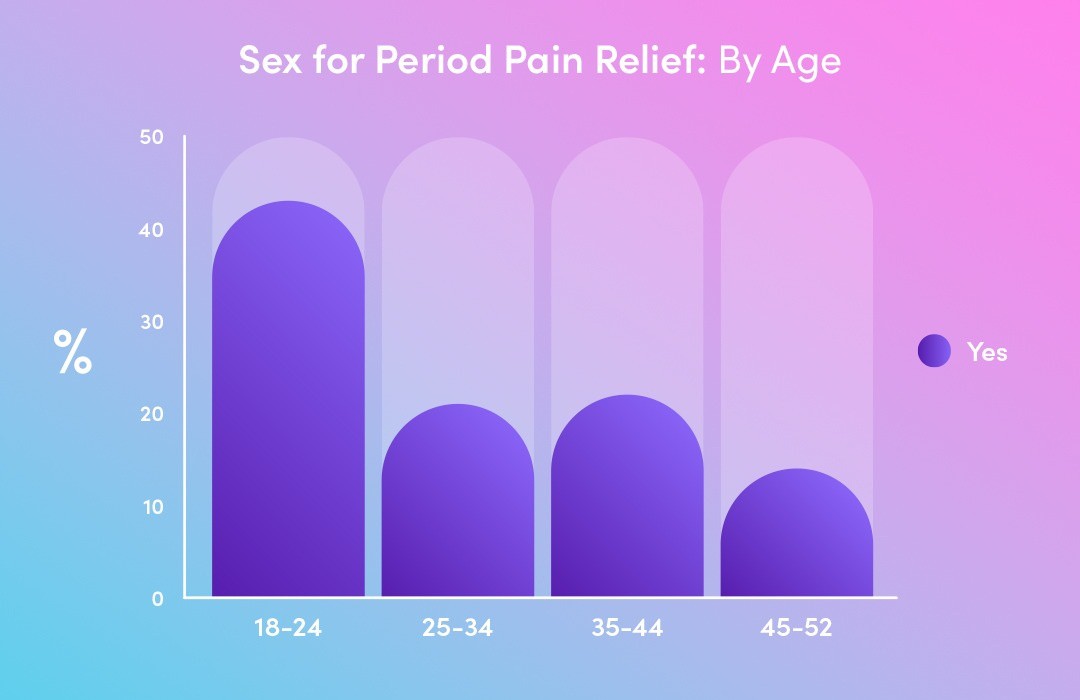
Our data revealed that almost 1 in 5 women (18%) have used sex for period pain relief - and that number more than doubles when looking at Gen Z folks alone (43%). When broken down by generation, generally the youngest were most on board with sexual activity to relieve period pain.
Why younger generations might be more open
Gen Z’s penchant for period sex is more than double that of older generations: 21% for Millennials, 22% for Gen X cusp, and dropping even lower for Boomers and beyond. There’s a few reasons why this could be…
- Growing cultural openness around discussing periods and sexual wellness
- Better access to online sexual health information on social media channels
- Less stigma around masturbation and exploring pleasure
Sex for period pain relief by sexual orientation
Homosexual people were over twice as likely to try having sex to relieve period pain; 35% of gay and lesbian respondents answered ‘yes’, compared with only 16% straight respondents. Almost half of bisexual respondents (40%) answered ‘yes’, making them most likely to try sex to relieve menstrual pain.
“There’s no single explanation for this, but members of the LGBTQIA+ community may be less bound by restrictive attitudes towards sex and pleasure, and how that ‘should’ look," says Annabelle.“It’s fantastic to see that people who aren’t in heteronormative relationships might feel they can discard tired taboos and embrace sex as part of their wellbeing.”
5 ways to make period sex feel even better
“Pleasure during menstruation is absolutely possible, and for many it can actually feel better than other times of the month,” says Annabelle. “Many people find their period blood works as a natural lubrication, which can maximise comfort during masturbation or penetration.”
Hormonal fluctuations might make you feel less than sexy when you're on you're period. There's no pressure to try it if it's just not for you. But, if you'd like to see if sex could actually make you feel better, try these tips.
Warmth
A warm massage oil or heating pad on the lower abdomen beforehand can relax the muscles and encourage blood flow, which might help ease cramps and boost arousal. You can even get warming sex toys that might feel good to tease around your belly and vulva before (or during!) sex.
Communication
An open conversation before period sex allows you to address any anxieties and reassure each other. It’s also important to regularly check-in during sex itself. Try asking your partner questions like “How does this feel for you?” and openly vocalising when you want to change pace or positions. You can even agree on a safeword that allows you to stop sex immediately, without judgement.
Lube
Lubrication can make any sex more comfortable and enjoyable, and since hormonal fluctuations during menstruation affect natural lubrication levels, lube is especially helpful during your period - enhancing pleasure, reducing friction, helping prevent discomfort, and making penetration smoother for both solo and partnered play.
Toys
Introducing a sex toy or two is a great way to maximise pleasure at any time of the month, but especially on your period. Penetration could be unappealing or uncomfortable during menstruation, and it can be more difficult to orgasm due to tiredness or pain from cramps. A clitoral stimulator with multiple suction modes could aid orgasm without any need for penetration.
Position enhancers
A pillow can slide under the hips, support the neck, or go between your legs, depending on your position of choice. A good quality sex wedge won’t flatten under you (plus you can whip off the cover for easy cleaning after). That extra bit of support makes sex even more relaxing and enjoyable, especially when you’re tired and crampy.
4. Sex for stress relief
Stress can impact our entire body - from muscle tension and headaches, to mood, focus, and sleep - so those same chemicals that can help with pain relief are also incredibly useful here.
65% of over 2,000 survey respondents said they had sex to relieve stress. That's a vast majority and they're certainly on to something! For many people sex is a natural way to unwind, reconnect with their bodies and partners, and release pent up tension.
When it comes to gender, the split was pretty much equal, with 66% of men claiming to have had sex to reduce stress, and women only 1% behind at 65%.
Of course, chronic stress needs addressing by a professional. But if you've had a hard day at work or long, tiring week, there's nothing wrong with turning to pleasure to help decompress.
Which generation has sex for stress relief?
“The majority of us, across the board, are turning to sex to relieve stress, which is fascinating.” says Annabelle.
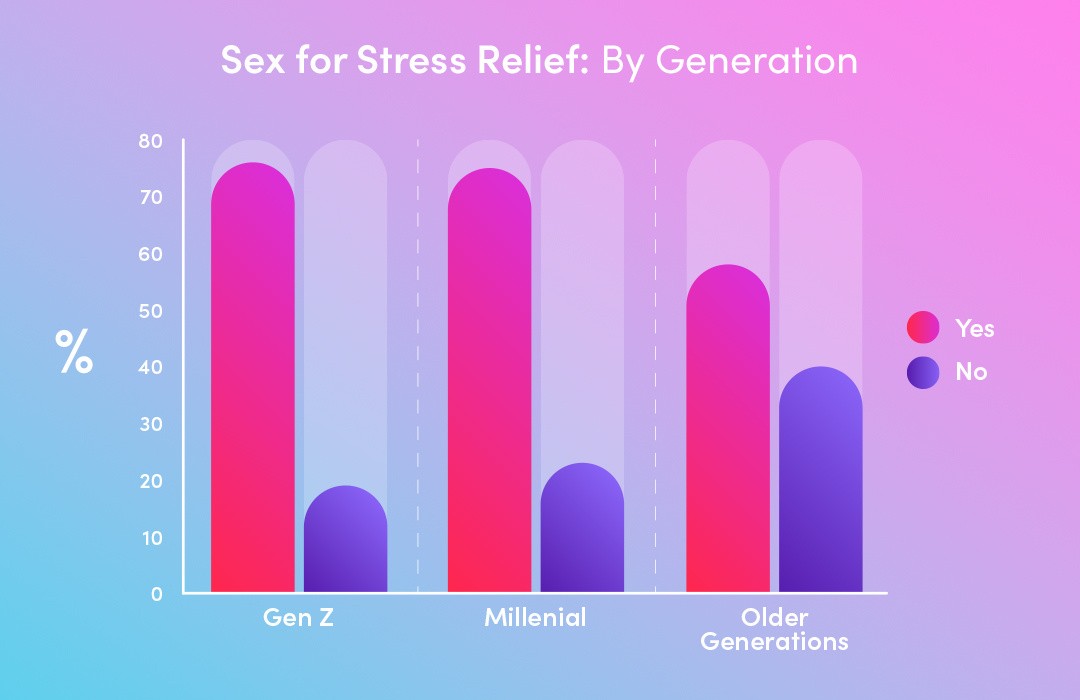
Generational trends reveal that Gen Z and Millennials are leading the way when it comes to using sex as a stress-buster, with 76% of Gen Z and 75% of Millennials answering ‘yes’. Coming of age in a world that’s more open about sex and mental health could mean they’re more relaxed about embracing pleasure as part of self-care.
Amongst older generations, the majority (58%) have used sex as a stress-reduction tool, but a significant minority (40%) still answered no. It’s possible that generations before millennials have simply evolved their coping mechanisms for stress, or they’re at a stage in their lives where stress has taken a different form.
“Libido may reduce with age, especially in women after menopause. Beyond biology, it’s possible that a combination of cultural attitudes towards sexuality, openness in discussing mental health, and more accessibility to information online, all normalise younger adults turning to sexual activity as a coping strategy,” Annabelle explains.
*Sources: Lovehoney x Cint survey, 2,022 nationally representative respondents (January 2025)